Texting and direct mail together: reaching owners who don't text back
Many owners never reply to a text but will open a letter. Here's a simple sequence that combines the two, a worked example of the math, and how to keep track of who got what.
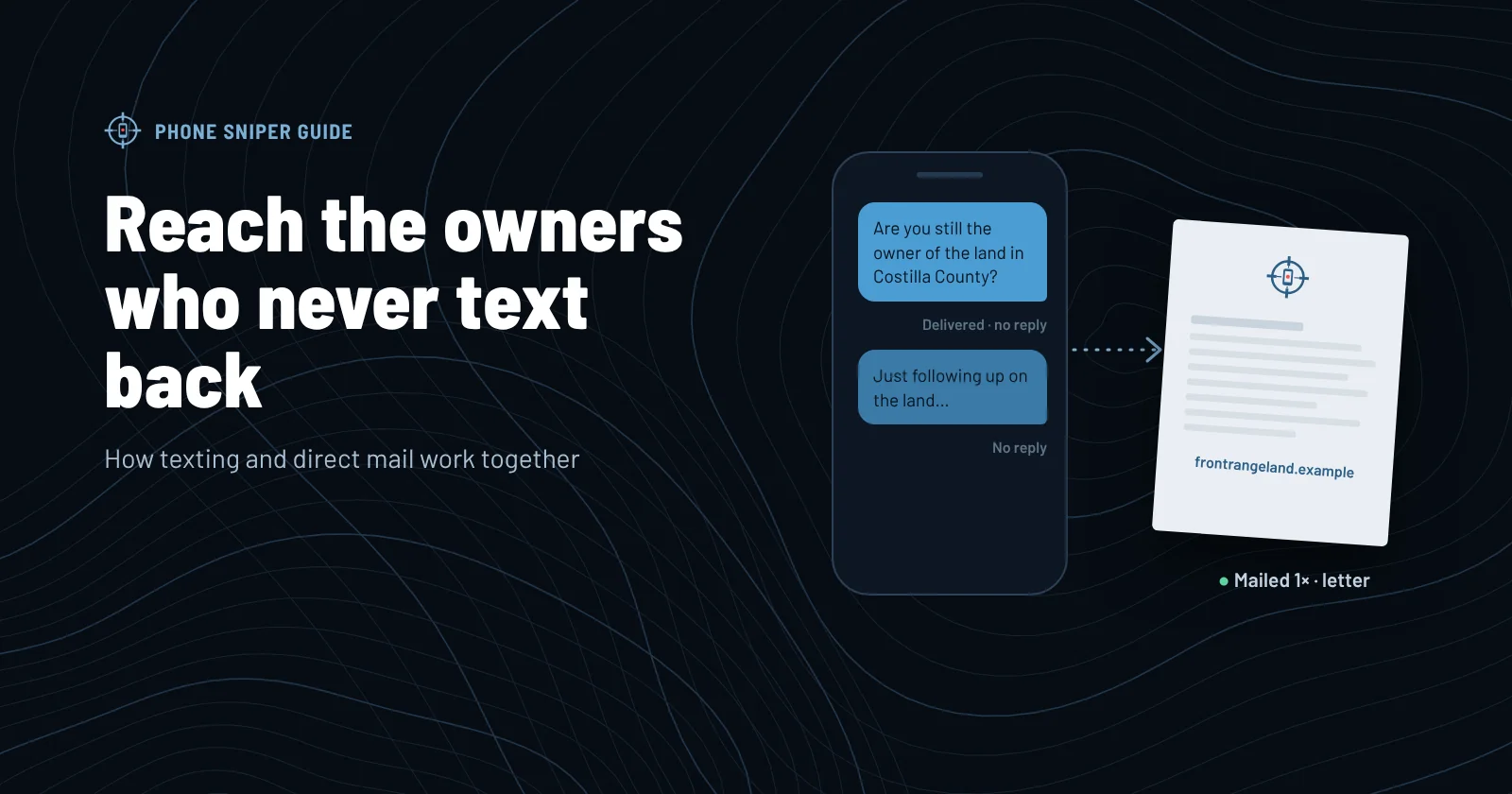
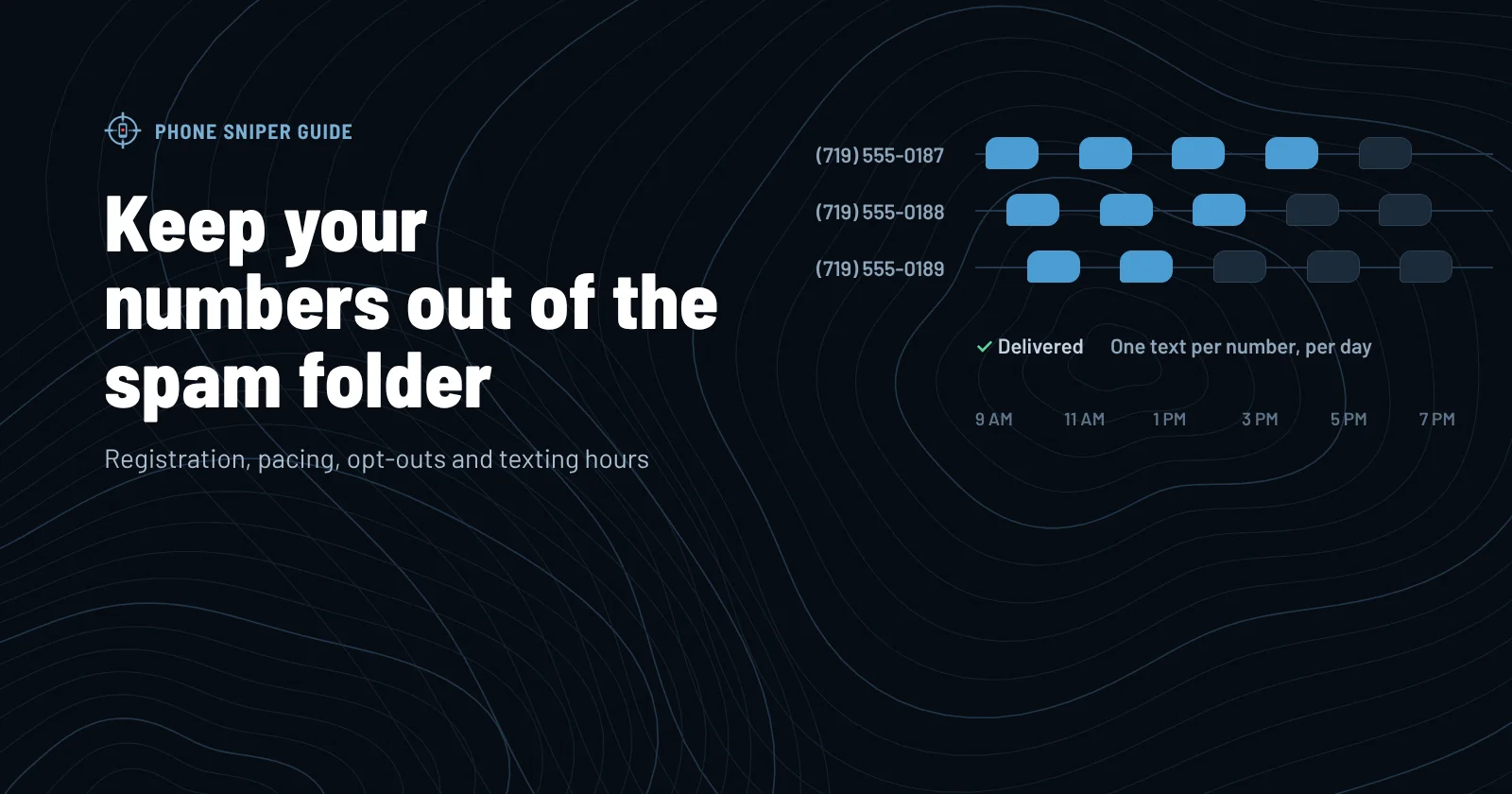
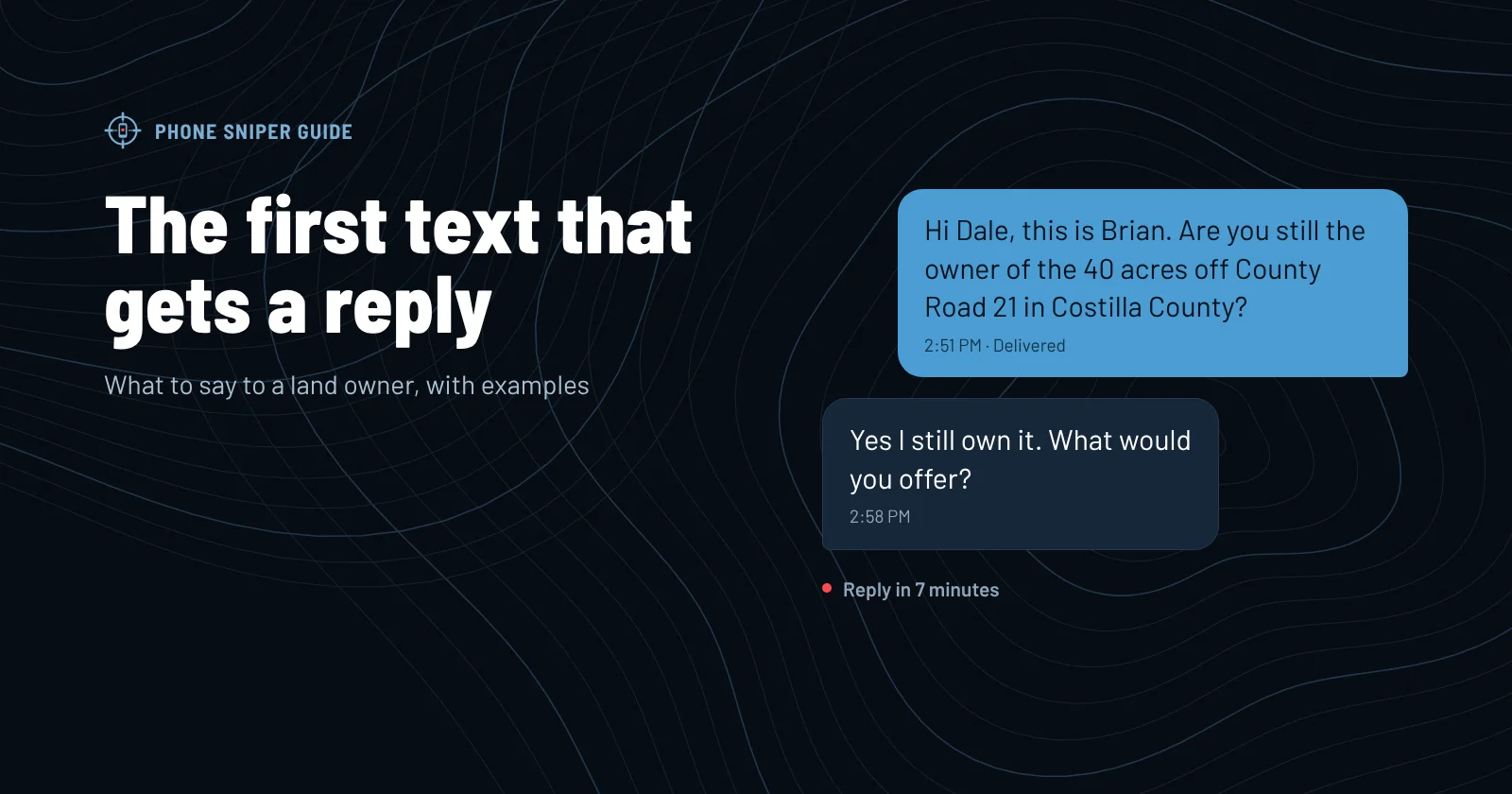
Texting is the fastest, cheapest way to start conversations with property owners. But it never reaches everyone. Some numbers on a skip-traced list are wrong or disconnected. Some owners don't text. Some ignore anything from a number they don't recognize.
Many of those owners will still open a letter. That's especially true of the owners land investors care about most: people who have held a rural parcel for decades, inherited it, or live out of state and rarely think about it.
You don't have to pick one channel. Used together, texting finds the quick yeses cheaply, and mail picks up owners texting can't reach. This guide covers a simple sequence, a worked example of the math, how to write a letter that gets calls, and how to keep the two from tripping over each other.
Why texting alone leaves owners behind
Even a well-run texting campaign reaches only part of a list. Skip-traced phone numbers are often outdated, belong to a relative, or are landlines that can't receive texts. Of the owners you do reach, most won't answer the first time, and some never will, no matter how good your message is.
The mailing address on the county record is usually more reliable, because it's where the tax bill goes. That makes mail a natural second channel: you're reaching the same owner through the address they actually use for property business.
A simple sequence
Here's a sequence that works for most land and house lists. Adjust the timing to fit your market, but keep the order.
| When | Step | Who gets it |
|---|---|---|
| Day 1 | Opening text | Every owner with a phone number |
| Day 4 | Soft follow-up text | Owners who didn't reply |
| Day 10 | Letter | Owners who still haven't replied, plus owners with no phone number |
| Day 30 | Second letter or postcard | Owners who still haven't answered |
| Every 60 to 90 days | Another letter or postcard | Owners who haven't said no |
Two rules make this work. First, anyone who replies drops out of the sequence and becomes a conversation. Second, anyone who says no, or asks you to stop, comes off every list and doesn't get mailed later.
The math: a worked example
The best way to see why the combination works is to run the numbers. The response rates below are assumptions for the example, not promises. Your rates will depend on your list, your market and your message, so plug in your own.
Say you have a list of 1,000 land owners and you assume:
- About 75% of the phone numbers reach a working cell phone.
- About 6% of the owners you reach reply across an opening text and one follow-up.
- About 1% of owners who get a letter call or text you back.
- Texts cost about 3 cents each, and a letter costs about $1 printed and mailed.
Here's what each approach costs under those assumptions:
| Approach | Spend | Conversations | Cost per conversation |
|---|---|---|---|
| Mail only | $1,000 (1,000 letters) | 10 | $100 |
| Text only | about $60 (about 2,000 texts) | 45 | about $1.33 |
| Text, then mail the rest | about $1,015 (texts plus 955 letters) | 55 | about $18 |
Texting wins on cost by a wide margin. So why mail at all? Because the 10 conversations from mail are with owners texting didn't reach. They aren't the same people. And in land investing, one deal is usually worth far more than the cost of the letters that found it. If one in ten conversations becomes a deal, an extra 10 conversations is roughly one more deal from a list you already paid for.
The point isn't the exact numbers. It's the order: text first because it's cheap, then spend mail money only on the owners texting couldn't reach.
How to write a letter that gets calls
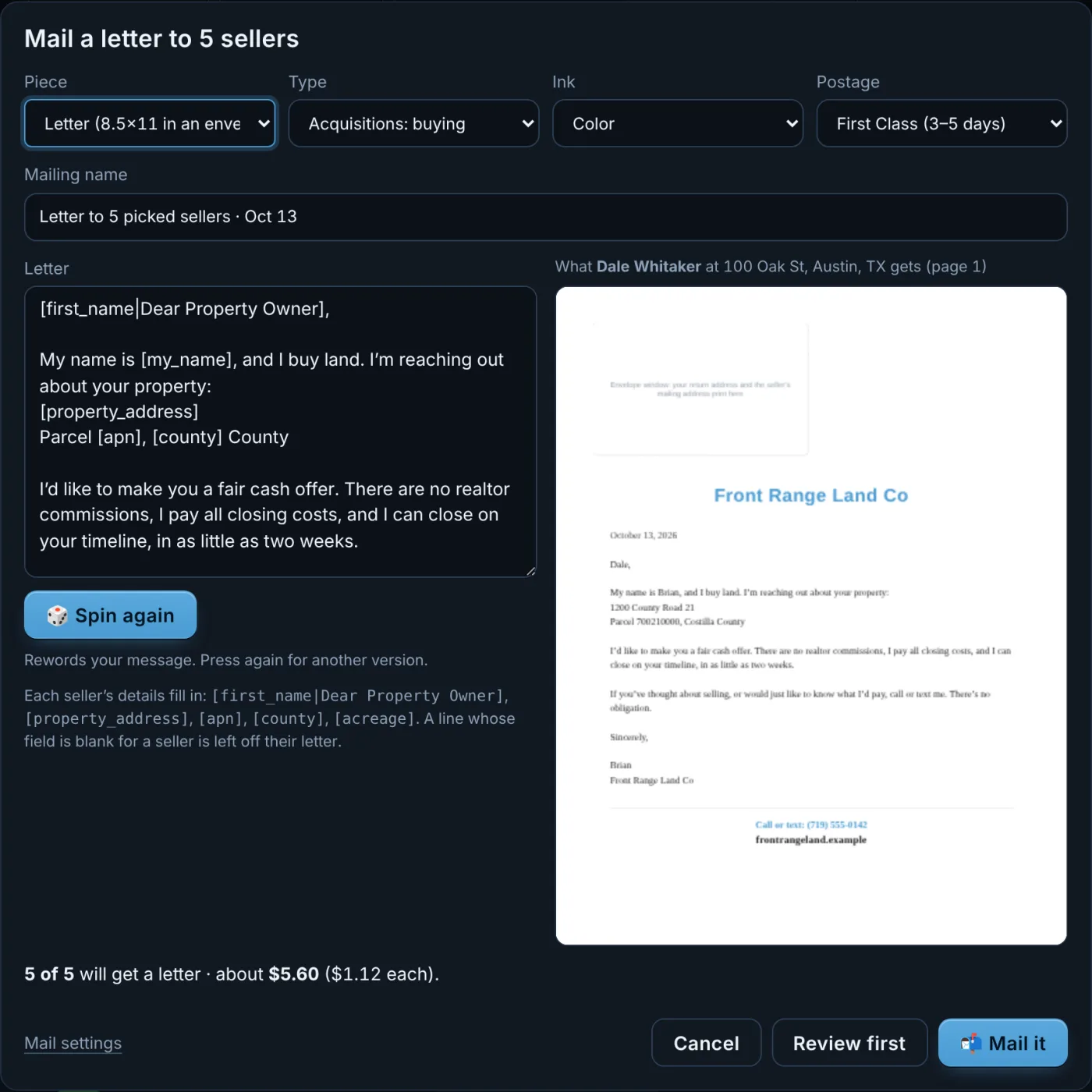
A letter works best when it reads like it came from a person, not a mail house. The goal is the same as a first text: get the owner to respond.
- Use their name and their property. Mention the county, the road, the acreage or the parcel number. It shows you looked at their land specifically.
- Keep it to one page. Say who you are, why you're writing, and what you'd like them to do.
- Ask for one thing. "Call or text me" is better than a list of options.
- Make it look personal. Put your logo at the top, your name and photo by the signature, and your phone number and website where they're easy to find.
- Be straight about the offer. It's fine to say you'd like to make a fair cash offer. Leave out the hype.
Letters or postcards?
Letters in an envelope feel more personal and have room to explain. Postcards are cheaper and get seen without being opened, which makes them good for the later, lighter-touch steps. Many investors use a letter for the first mailing and postcards after that.
Keep track of who got what
Combining channels creates a bookkeeping problem. Get it wrong and you mail an owner who already agreed to sell by text, or text someone who asked you to stop. Both waste money, and the second can create real trouble.
Keep one record per owner that holds their texts, replies, mailings and deal stage together. Before every mailing:
- Remove anyone who has replied. They're in a conversation now.
- Remove anyone on your Do Not Contact list or marked "not interested."
- Check how many times each owner has been mailed, so you can space out repeat mailings.
- Make sure the mailing address is the owner's, not the property's, unless they live on it.

Mistakes that waste money
A few habits quietly drain a combined texting and mail budget:
- Mailing the whole list first. Mail is the expensive channel. Let texting take the cheap wins before you print anything.
- Mailing people who already answered. Someone who replied "not interested" two weeks ago doesn't need a letter. Neither does someone already negotiating with you by text.
- Mailing the property address for vacant land. Nobody lives there. Use the owner's mailing address from the county record.
- Giving up after one letter. Direct mail works through repetition. Plenty of owners respond to the third or fourth piece, not the first.
- Changing everything at once. If you change the list, the letter and the timing in the same month, you won't know which change helped.
- Not tracking where deals came from. Ask every seller how they heard from you, and record it, so you know which channel earned the deal.
Measure both channels the same way
Response rates alone don't tell you much, because texting and mail have very different costs. Compare them on the same footing:
- Cost per conversation: what you spent divided by the number of owners who replied or called.
- Cost per deal: what you spent divided by the number of contracts that came from that channel.
- Time to first response: texting replies come in hours, mail responses over weeks.
Track where each deal started. After a few months, you'll know what a conversation costs on each channel in your markets, and you can shift money toward whatever is working.
Getting started
You don't need a big budget to try this. Take your next texting list and, two weeks after the follow-up text, mail a letter to the owners who didn't reply. Track the calls and texts that come back from the letters separately. That one test tells you more about your market than any article can.
In Phone Sniper you can mail one owner, a few you pick, or your whole list straight from Contacts. Letters and postcards carry your logo and headshot, a Mailed column shows how many times each owner has been mailed, and a mail-status filter makes it easy to target only the owners who haven't answered.